Case Study - Zync: Leading an AI/video SaaS from interface to infrastructure
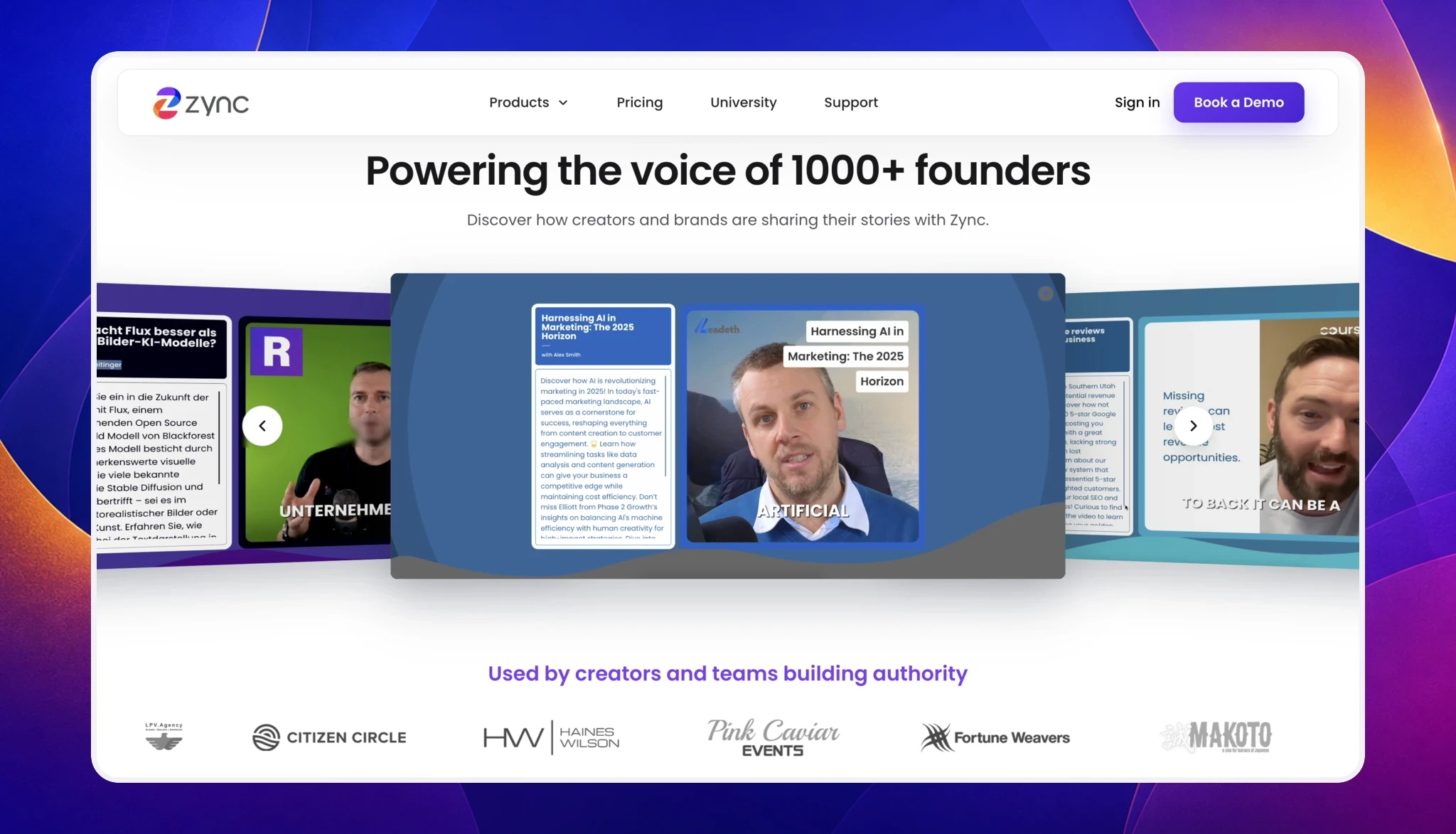
Zync is a founder-brand content platform built around a simple idea: showing up should not require living in an editing timeline. Across five products, it turns a point of view into publishable video—from AI-assisted recording and production to real-video conversations in ChatGPT and asynchronous customer responses for social proof.
I joined Zync as a front-end developer, then took the work deeper—into backend systems and cloud infrastructure—helping shape five products from the interface to the foundations.
- Client
- Zync
- Year
- April 2022 – Present
- Service
- Full-stack product engineering
Overview
I joined Zync as a front-end developer, then followed the work into backend systems, AI/video workflows, and cloud infrastructure across five products.
The role grew with the product: product discovery, architecture, implementation, code review, mentoring, DevOps, and production reliability all became part of the work.
What I did
I started at Zync on the front end and grew into full-stack engineering across five product areas.
I worked across product discovery, architecture, implementation, code review, mentoring, DevOps, and production reliability.
I built lightweight SDKs, reusable libraries, CLIs, and internal tools supporting screenplay playback, background-free video workflows, AI avatar views, and video editing.
Product delivery and aggregate system outcomes use team or system language where personal attribution would be misleading.
- React
- Next.js
- Redux
- Single-Page Applications (SPA)
- Multi-Page Applications (MPA)
- TypeScript
- Node.js
- GraphQL
- Python
- Remotion
- FFmpeg
- OpenCV
- GCP
- Azure
- Docker
- Kubernetes
- AKS
- GKE
- Azure Service Bus
- WebSockets
- Daily.js
- Stripe
- Product areas led
- 5
- Active users supported
- 1,000+
- Cloud compute cost reduction
- 90%
- P0 MTTR
- 30 min
Project snapshot
- Role
- Started as a front-end developer and grew into Lead Full-Stack Engineer across five product areas.
- Ownership
- I led full-stack engineering across product discovery, architecture, implementation, code review, mentoring, DevOps, and production reliability.
- Leadership scope
- I mentored 5 engineers.
- Relevant stack
- React, Next.js, Redux, TypeScript, Node.js, GraphQL, Python, Remotion, FFmpeg, OpenCV, GCP, Azure, Docker, Kubernetes, AKS, GKE, Azure Service Bus, WebSockets, Daily.js, and Stripe.
The problem
Zync spans product interfaces, services, AI/video processing, and cloud operations. The engineering challenge was to deliver useful content workflows across that surface while keeping expensive media work and production reliability connected to the product experience.
The work could not stop at a polished interface. Rendering economics, production throughput, failure diagnosis, and the team’s ability to ship and review changes all affected whether the product was dependable.
Implementation - Implementation and product highlights
- Full-stack product leadership. I led full-stack engineering across five product areas, from product discovery and architecture through implementation, code review, mentoring, DevOps, and production reliability. I mentored five engineers.
- Cost-aware video rendering. I led queue-based rendering work across the AI/video stack, reducing cloud compute costs by 90%. The system supported 200 renders per day, with peaks around 500.
- Production reliability. I led reliability work across cloud operations, improving P0 MTTR to about 30 minutes.

